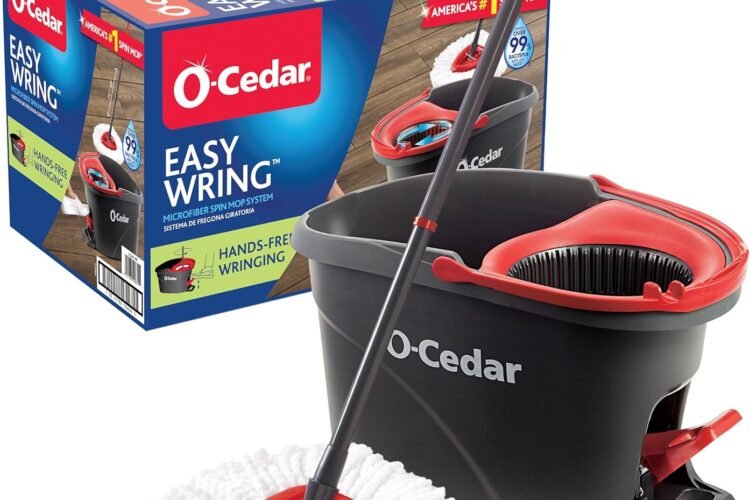
Floor care is one of the most universal tasks in home maintenance. Whether a living space is large or small, finished with tiles, hardwood, laminate, or vinyl, keeping floors clean contributes to better hygiene, comfort, and overall home appearance. Among the many tools designed to simplify this routine, the O‑Cedar EasyWring Microfiber Spin Mop and Bucket System stands out as a widely recognized option for managing everyday dust, spills, and grime.
This long‑form guide explores the system in detail—its design, materials, function, and broader cleaning concepts that help users understand how it fits into a modern home‑care routine. It is not a review, but an informational deep dive into the product’s structure and common uses.
1. Understanding the Purpose of a Spin‑Mop System
Traditional mops rely on manual wringing—twisting the mop head with one’s hands or using a simple mechanical wringer attached to a bucket. While effective to a degree, these methods often leave excess moisture in the mop, making floors take longer to dry and requiring more physical effort.
A spin mop system is designed to improve these shortcomings. Its key purposes include:
1.1 Controlled Moisture Management
Excess water can damage some floor materials, particularly wood. By spinning moisture out of the mop using a foot‑pedal mechanism, the user can adjust how wet or dry the microfiber head remains. This moisture control is particularly useful for delicate surfaces.
1.2 Reduced Physical Strain
The mechanical spinning action of a spin mop bucket reduces the need for:
- Twisting motions
- Bending
- Direct hand‑contact with dirty mop fibers
This can make the process more ergonomic.
1.3 Efficiency in Routine Cleaning
Many homeowners prefer a mop system that can handle both:
- Light daily cleaning (dust, dry debris, minor spots)
- Occasional deep cleaning (sticky residue, tracked‑in dirt, spills)
Spin mop systems are adaptable for both tasks because one can vary the intensity and moisture levels as needed.
2. The Components of the O‑Cedar EasyWring System
The O‑Cedar EasyWring Microfiber Spin Mop includes two essential components:
- The microfiber mop
- The EasyWring bucket with integrated wringer
Each part carries specific design features that support daily floor‑cleaning routines.
3. The Microfiber Mop: Material Science and Practical Design
Microfiber is central to the system’s cleaning ability. Microfiber is a synthetic material made from very fine polyester and polyamide fibers. These fibers are processed to create a dense, highly absorbent texture capable of trapping dirt more effectively than many natural fibers.
3.1 What Makes Microfiber Effective?
Microfiber relies on three main characteristics:
A. High Surface Area
Each strand is extremely fine—much thinner than a human hair. Bundled together, they create thousands of contact points with the floor surface.
B. Electrostatic Properties
Microfiber can hold dust and small particles through static attraction, making it suitable for both dry and damp cleaning.
C. Absorption Capacity
The tiny pockets between fibers can hold a notable amount of water, allowing the mop to capture spills and moisture efficiently.
3.2 Shape and Structure of the Mop Head
The mop head is shaped in a triangular format, which supports:
- Better access to corners
- More consistent surface coverage
- Easier navigation around furniture
Because many households include tight or irregular spaces, this shape can support more efficient movement.
3.3 Machine Washability
Microfiber mop heads are machine‑washable, which expands their lifespan. Washing helps remove embedded debris that cannot be rinsed out manually. However, microfiber should typically be washed without fabric softeners, as softeners can coat fibers and reduce absorbency.
4. The EasyWring Bucket System: Mechanical Overview
The bucket is more than a container for water—it includes an integrated wringing system designed to remove excess moisture from the mop head using centrifugal force.
4.1 Foot Pedal Operation
A foot pedal connects to an internal spinning mechanism. Pressing it rotates the wringer. This allows hands‑free wringing and gives the user precise control over moisture levels.
4.2 Splash Guard Feature
A splash guard surrounds the spinning area. Its purpose is to keep:
- Water
- Dirt
- Debris
from leaving the bucket during wringing.
4.3 Water Management
The bucket is sized to hold sufficient water for multiple cleaning passes. Because microfiber traps dirt, regular rinsing and wringing cycles help refresh the mop head during the cleaning process.
5. How the System Works on Various Floor Types
The O‑Cedar system is designed for general household use. Different floors require different cleaning approaches, but microfiber’s adaptability makes it suitable for most sealed surfaces.
5.1 Tile Floors
Tiles often collect gritty dirt in small depressions. Microfiber’s fine fibers can reach into small surface variations, helping to lift soil from:
- Ceramic
- Porcelain
- Stone tiles
5.2 Hardwood Floors
When used slightly damp (not wet), microfiber supports hardwood care because it:
- Minimizes moisture exposure
- Lifts dust and fine debris gently
- Reduces streaking
Moisture control through the wringer is particularly relevant here.
5.3 Laminate Floors
Laminate flooring can swell if exposed to excess moisture. The spin function helps keep the mop head safe for sensitive laminate surfaces.
5.4 Vinyl and Linoleum
These materials tolerate moisture better than wood, yet still benefit from even, controlled damp cleaning. Microfiber tends to glide smoothly over vinyl, reducing the effort needed.
6. Cleaning Strategies and Techniques
Using the system effectively involves planning your cleaning path and understanding how dirt behaves on flooring surfaces.
6.1 Daily Maintenance (Dry or Damp)
For everyday dust, a lightly damp or even dry microfiber mop head can remove:
- Light debris
- Dust buildup
- Pet hair
- Surface particles
Because microfiber attracts particles electrostatically when dry, it works similarly to a dust mop.
6.2 Weekly or Deep Cleaning
For deeper cleaning:
- Use warm (not boiling) water
- Add a suitable floor‑safe cleaning solution if needed
- Mop systematically from the farthest corner toward the exit
6.3 Spot‑Cleaning Spills
Microfiber absorbs spills quickly. For sticky or heavy spills, rinse the mop head frequently.
7. The Science of Microfiber and Dirt Removal
The effectiveness of microfiber can be explained through its structure and behavior with water and oils.
7.1 Capillary Action
Microfiber wicks liquids through tiny channels. This pulls moisture—and dissolved dirt—into the fiber matrix.
7.2 Debris Trapping
Microfiber has a combination of:
- Mechanical grip (due to fine fibers)
- Electrostatic attraction
This combination makes it effective on both wet and dry dirt.
7.3 Microfiber and Bacteria
Some laboratory tests (conducted on general microfiber materials, not specific to any brand) show microfiber can remove a notable percentage of bacteria simply through mechanical action, though users should not rely on it as a disinfectant. Disinfectants must be applied separately if sanitation is required.
8. Ergonomics and User‑Centered Design
The system is designed to reduce stress on the user’s body.
8.1 Reduced Bending
The telescopic handle extends to various lengths, supporting more comfortable posture and reducing strain.
8.2 Hands‑Free Wringing
The foot pedal and spinning wringer reduce hand contact with dirty water.
8.3 Maneuverability
The triangular mop head rotates, providing flexibility under furniture and into tight spaces.
9. Maintenance and Care Guidelines
A long‑lasting floor‑care tool requires proper maintenance.
9.1 Mop Head Care
- Machine wash periodically
- Avoid bleach and fabric softeners
- Let air‑dry to preserve fibers
9.2 Bucket and Mechanism Care
Rinse the bucket after use to avoid buildup. Allow it to dry before storing, preventing odors or residue accumulation.
10. Sustainable Considerations
Microfiber mop systems can be more sustainable than disposable cleaning systems due to:
- Reusability of mop heads
- Reduced reliance on single‑use pads
- Compatibility with water‑only cleaning
Microfiber’s ability to clean effectively with minimal chemicals can also reduce chemical usage in the home.
11. Understanding the Role of Color and Aesthetic Design
The system is available in red and gray, a pairing chosen for visual practicality and branding consistency. Red provides high visibility, reducing the risk of tripping or misplacing the mop head, while gray accents offer a neutral contrast.
12. Situations Where the System Fits Particularly Well
Although designed for general use, certain home situations can benefit especially from this type of mop:
12.1 Homes with Pets
Microfiber captures fur easily, especially during shedding seasons.
12.2 Homes with Children
Frequent spills and footprints often require quick, controlled cleaning.
12.3 Multi‑Room Homes
The bucket system supports long cleaning sessions without needing constant water changes.
12.4 Small Apartments
The system is compact enough for limited storage spaces.
13. Microfiber vs. Traditional Cotton Mops
Understanding how microfiber compares to traditional mop materials provides context.
13.1 Absorbency
Microfiber absorbs more liquid relative to its weight.
13.2 Particle Pickup
Traditional mops often push dirt around, while microfiber traps it.
13.3 Drying Time
Microfiber dries faster, reducing the risk of mildew.
13.4 Weight
Microfiber remains lighter when wet compared to cotton.
14. Summary
The O‑Cedar EasyWring Microfiber Spin Mop & Bucket System is designed as a practical and ergonomic floor‑cleaning tool built around three ideas:
- Efficient microfiber cleaning
- Hands‑free moisture control
- Adaptability to different floor types
Its system unites thoughtful engineering and material science to support daily and deep cleaning routines in a wide range of home environments.